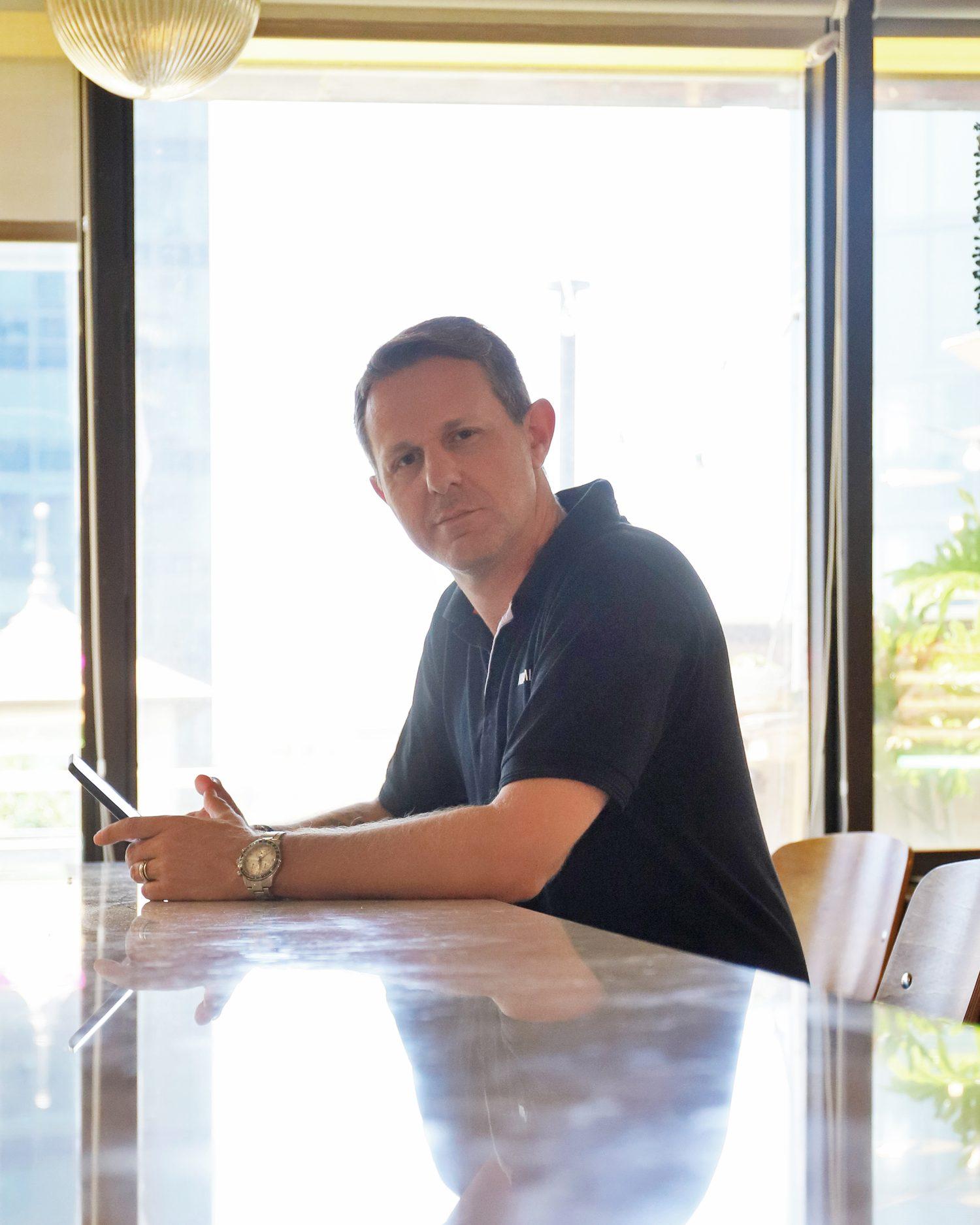
A marketing exec who never wrote code, now shipping software with AI

and here's what I've learned along the way

From watching developers to developing apps.

Roger Ordman

For 25 years I sat next to engineers. I listened, framed problems, decided what was worth building, and never wrote a line of code — and I always assumed I never would.

Three months ago I asked an AI to build me a stopwatch. Five minutes later, it worked.

That was my aha moment, and how!

I'm still VP Marketing at Foretellix — growing the brand and helping move the commercial needle. But now I also build software.

13 projects in the last three months. Some working, some not, some abandoned, some going strong!

A recipe builder for the gin I make at home, GPS ski-tracking that knows every resort I'm likely to visit, The Drunk AI that recommends cocktails based on what you have in your home bar.

And others that change my day job. One saved my company five thousand dollars before lunchtime. Several quietly reshaped how my marketing work gets done — AI agents I designed and tuned that help write long-form articles, frame positioning, and turn research into publishable thought leadership.

The 25 years I spent next to engineers and managing product and marketing teams weren't a gap to overcome. They were preparing me for this era of AI.

This site is what I've built and learned along the way. What changed, what surprised me, and why I think the doors that opened for me are open for a lot of other people who don't realise it yet.
The Work

What follows are some of the projects I made in the first three months. Each one is here for what it taught me, and hopefully will be helpful for you too.

Chapter 01 · Origin

Stopwatch

Let's build something, Daniel said, and five minutes later I had a working stopwatch app! I stopped being someone who watched software get built and started being someone who built it.

Claude's Stopwatch

00:00.00

17 February 2026. I asked Claude to build me a stopwatch. I answered some questions, made some simple design decisions and five minutes later, this was running online.

It wasn't impressive — that's the whole point. It was easy, and that was the part that broke something loose. Within a week I was building things that mattered.

From the Field Notes

The five-minute stopwatch experiment

Chapter 02 · Built for friends

The Drunk AI

I wanted to create something, fun, engaging and useful for my first app - somehow I gravitated to cocktails... This is where the addiction kicked in, you start with a simple idea and watch it grow and evolve.

The Drunk AI logo

The Drunk AI asks you your mood, your spirit of choice and then uses AI to suggest three drinks from easy to complex - let's go one step further. The Drunk AI can tailor the cocktails to the contents of your actual bar. How about recommending ingredients to add to your home bar - there is no end.

We are only limited by our imagination, not by coding skills!

Chapter 03 · Built for a holiday

Cervinia

Trying to build an app that is of consumer quality using only freely available external tools was a challenge, challenging Claude made marked improvements.

A snowboarding holiday in Cervinia was coming up. Could I build something for the trip itself? Tal suggested that a piste/lift route planner would be useful - how to get from A to B. When I came back from my trip I found that all I really cared about was tracking my speed, distance, vertical, and time on the mountain, so instead of paying ₪150 for an available app, I added this capability too.

Scaling up from one resort to 4,600 ski resorts wasn't the hard part - debugging it while I was sat in my office was!

Chapter 04 · First professional value

Monday-to-Asana

We were scheduled to renew our $5,000 license for Monday - but the free Asana tier was all that my team needed. I wondered if Claude could help me migrate all our current and historical project data.

Monday-to-Asana — placeholder

We had often thought of dropping our Monday license but we didn't want to lose 5 years of historical project data. I pondered this on the way to work and with good project definition, API connections, a test run, and debugging, we were good to go. I went to lunch, Claude worked away.

The lesson wasn't about saving the money. It was to think beyond normal constraints and challenge yourself, and AI, to go beyond.

From the Field Notes

How I saved my company $5,000 before lunchtime

Chapter 05 · From spreadsheet to app

RoGin

If you can describe what you want, you can build what you want. RoGin started as an Excel sheet that tracked what Nira and I cooked up in the kitchen and became something I use to suggest new botanicals and innovative recipes.

RoGin logo

I make gin at home. The spreadsheets I'd been using to track recipes had become unworkable, so I built RoGin in a weekend — a phone app for adding botanicals, tweaking ratios (this used to be a nightmare), maintaining a log, and asking the AI what would balance a flavour profile.

It didn't stop there. RoGin learned to do the measurement maths itself. Then it learned to suggest combinations based on what I already had and feedback I had given on previous batches. Some projects only stop growing because you stop asking what's next.

Chapter 06 · The honest miss

EscarGo

AI carries the code. It doesn't carry the craft. Some domains still need the craftsman.

EscarGo screencast — placeholder

EscarGo was supposed to be a snail-racing game. I had an idea, I had AI, I had time. What I didn't have was any sense of what makes a game actually engaging.

I built it. Twice. Both versions are playable, neither is fun. Claude compensates for the code-knowledge gaps. It doesn't compensate for craft I haven't developed. Creating engaging games is still beyond my reach — but never say never!

Chapter 07 · The opus (coming)

FORGE

One thing I have learnt along the way, not least from my decade in product management, is that the more time you spend defining a project, the less time you spend fixing it later.

FORGE — in design, May 2026

FORGE is what comes next. Earlier this year I built a Marketing Dashboard. Then a stack of AI agents and skills that help my team write blogs, frame positioning, and turn research into publishable work. Each of them is useful. None of them talk to each other.

FORGE is where they roll into a single system — a marketing operating system. Currently in its first month of design, with not a single line of code written yet. Which is, it turns out, the most important month.

Stay tuned, this is going to be epic!